Market Overview
The global fiber optic cable market has entered a new growth paradigm in 2025-2026, driven not by traditional telecom expansion but by the unprecedented demands of artificial intelligence infrastructure. According to CRU data, global fiber optic cable demand grew by 4.1% year-over-year in 2025, reaching approximately 5.50 billion core-kilometers, with the market size estimated at USD 9.5 billion.
The most transformative shift is occurring in data center fiber demand, which surged by 75.9% in 2025 to reach 69.6 million core-kilometers (CRU). This explosive growth represents a paradigm change: for the first time in the industry's history, cloud hyperscalers have overtaken telecommunications carriers as the largest incremental buyers of optical fiber. CRU projects that data center fiber demand will exceed 100 million core-kilometers in 2026, with AI-driven applications alone accounting for over 35% of data center fiber consumption by 2027, up from less than 5% in 2024.
On the supply side, the global optical transceiver market surpassed USD 23 billion in 2025, representing a 50% year-over-year increase (LightCounting), fueled by 800G and 1.6T pluggable module deployments in hyperscale data centers. The fiber optic cable industry is witnessing a structural transformation from a cyclical commodity market to a technology-driven growth sector, with premium fibers commanding 20-30% price premiums over standard products.
Q: What Is the Global Fiber Optic Cable Market Size in 2025-2026?
According to CRU (Commodity Research Unit), global fiber optic cable demand reached approximately 5.50 billion core-kilometers in 2025, representing 4.1% year-over-year growth, with the market valued at approximately USD 9.5 billion. For 2026, CRU forecasts total global demand of 5.77 billion core-kilometers (+5% YoY), driven primarily by AI data center construction and North American broadband expansion. Data center fiber demand alone surged 75.9% in 2025 to reach 69.6 million core-kilometers and is projected to exceed 100 million core-kilometers in 2026.
Key Takeaway: The global fiber optic cable market reached ~5.50 billion core-km in 2025 and is projected at 5.77 billion core-km in 2026, with AI data centers emerging as the dominant growth engine.
Key Drivers Reshaping the Market
1. AI Data Center Infrastructure: The New Growth Engine
The single most powerful catalyst for fiber optic cable demand in 2025-2026 is the massive build-out of AI data centers. According to CRU, an AI-optimized data center requires approximately 10 times more fiber than a traditional data center due to the exponential increase in east-west traffic between GPU clusters. This factor has fundamentally altered demand elasticity: where traditional data center fiber demand grew at a 15-20% CAGR, AI data center fiber demand is growing at over 75% annually.
The capital expenditure commitments of the Big Four cloud providers confirm this trend. In Q4 2025, Microsoft, Google, Meta, and Amazon reported combined capital expenditures of USD 118.6 billion, a 64% year-over-year increase. Analysts project their full-year 2026 combined capex will reach approximately USD 570.8 billion, with the majority directed toward AI infrastructure, including fiber-rich data center interconnects. On the Chinese side, Alibaba announced in February 2025 a commitment of over RMB 380 billion (USD 52 billion) over three years for cloud and AI infrastructure, with Tencent and ByteDance also accelerating their AI investments.
2. 5G Network Expansion and Fiber Deepening
Deploy high-performance PLC splitters for your 5G fronthaul network. OPELINK offers full-band PLC solutions with low insertion loss and exceptional uniformity. Explore PLC Splitter Solutions
While 5G deployment is maturing in China, global 5G networks continue to expand. In China, the three major telecom operators procured over 182 million core-kilometers of fiber optic cable in the first eleven months of 2025 alone — the highest procurement volume in nearly three years. This reflects a shift from 5G base station backhaul to fiber-deepening initiatives, including 10G PON upgrades and rural broadband extension under China's "Broadband Upgrade" special initiative.
3. BEAD Program and North American Broadband Expansion
The U.S. Broadband Equity, Access, and Deployment (BEAD) program is expected to consume over 40 million core-kilometers of fiber optic cable in 2026 as states begin large-scale rural fiber deployments. Combined with private investment from Tier-1 carriers upgrading to XGS-PON and hyperscalers building long-haul dark fiber routes, North America has become the fastest-growing regional market globally.
4. Emerging Market Digital Transformation
India's "Digital India" initiative continues to drive massive fiber deployment across urban and rural areas. Southeast Asian markets including Indonesia, Vietnam, and the Philippines are experiencing rapid FTTX coverage expansion, with fiber-to-the-home penetration rates increasing by double-digit percentages annually. These markets, characterized by infrastructure build-out phases similar to China a decade ago, represent a substantial long-term demand pool for standardized fiber optic cable products.
Q: What Are the Key Drivers of Fiber Optic Cable Market Growth in 2026?
Four primary drivers are propelling the fiber optic cable market to record demand levels in 2026. First, AI data center construction is the dominant catalyst — a single AI-optimized data center requires 10 times more fiber than a traditional facility, with cloud hyperscalers (Microsoft, Google, Meta, Amazon) committing over USD 570 billion in combined 2026 Capex. Second, 5G network expansion continues globally, with China's three operators alone procuring 182+ million core-km in 2025. Third, the U.S. BEAD program is deploying over 40 million core-km for rural broadband in 2026. Fourth, emerging markets — led by India's Digital India initiative and Southeast Asia's FTTX rollout — are adding structural long-term demand.
Key Takeaway: AI data centers (10x fiber intensity), 5G expansion, U.S. BEAD program (>40M core-km), and emerging market FTTX build-out are the four pillars driving 2026 fiber optic cable demand.
Price Reversal: From Oversupply to Supply Crunch
After years of chronic oversupply that drove G.652.D bare fiber prices to historic lows in early 2025, the market has experienced a dramatic reversal. By March 2026, G.652.D bare fiber spot prices in China reached RMB 83.4 per core-kilometer, representing a cumulative increase of over 400% since May 2025. European market prices for equivalent products surged 159% year-over-year, confirming that the pricing inflection has spread globally.
Industry analysts estimate the global supply-demand gap at 5-10% for 2026, with the potential to widen to 15% by 2027 as AI-driven demand outpaces the industry's ability to bring new preform and fiber-drawing capacity online. After years of underinvestment during the 2023-2024 downturn — when many smaller manufacturers exited the market — the remaining capacity is concentrated among a shrinking pool of top-tier producers, creating what Open Source Securities describes as a "volume and price up-cycle" for the global fiber industry.
Hollow-Core Fiber: The Next Technological Frontier
September 2025 marked a watershed moment for hollow-core fiber (HCF) technology. Microsoft's Lumenisity team published breakthrough results in Nature Photonics, demonstrating a novel HCF design achieving attenuation of just 0.091 dB/km at 1550 nm — the first time any optical fiber has surpassed the ~0.14 dB/km physical limit of conventional silica-core fiber. This achievement represents a fundamental advance in transmission media physics.
Microsoft has since deployed approximately 1,200 kilometers of hollow-core fiber carrying live Azure customer traffic and has set a target of 15,000 kilometers by end of 2026. The company has formed a tripartite manufacturing alliance with Corning (fiber production at its North Carolina facility) and Heraeus (synthetic quartz supply) to industrialize HCF production. Amazon AWS disclosed in early 2026 that it has deployed HCF connections across 10 core data centers after a year-long technical validation process.
China has emerged as a formidable competitor in the HCF race. China Mobile deployed the world's first commercial anti-resonant HCF line between Shenzhen and Hong Kong in July 2025, achieving a record-low attenuation of 0.085 dB/km — the lowest for any commercially deployed optical fiber globally. China Telecom completed a 100-kilometer cross-border HCF link between Guangdong and Hong Kong, while China Unicom established an HCF interconnection linking its Hong Kong data center with the Hong Kong Stock Exchange, reducing latency by 32%. These deployments signal that HCF is transitioning from laboratory demonstration to commercial reality.
Application Segments: A Shifting Landscape
Upgrade your data center connectivity with OPELINK MPO/MTP patch cords and OM4/OM5 multimode fiber — optimized for 400G/800G transceiver interconnects.Explore MPO/MTP Patch Cord Solutions
The application mix of global fiber optic cable demand is undergoing a structural transformation. While telecommunications remains the largest end-use segment at approximately 52% of total demand (down from 55% in 2024), data center applications have expanded to 33% (up from 30%). Industrial and specialty applications account for 10%, with the remaining 5% distributed across medical, defense, sensing, and other niche verticals.
Within data centers, multi-mode fiber (OM4/OM5) continues to dominate short-reach intra-rack and inter-rack connections, while single-mode fiber — particularly G.654.E with its ultra-low loss characteristics — is experiencing rapid adoption in data center interconnect (DCI) and long-haul backbone applications. CRU data indicates that combined demand for multi-mode fiber and G.654.E cable reached approximately 8 million core-kilometers in 2025, and this figure is projected to grow at a double-digit CAGR through 2029 as AI cluster sizes expand.
Regional Market Dynamics
Accelerate your FTTH deployment with OPELINK drop cables. Customizable lengths, pre-connectorized options, and ITU-T G.657 bend-insensitive fiber available. Explore FTTH Drop Cable Solutions
Global Demand Forecast 2026 (CRU)
| Region |
Demand (Million Core-km) |
YoY Growth |
Key Drivers |
| North America |
149 |
+17.0% |
AI data centers, BEAD program, 5G expansion |
| China |
233 |
-1.4% |
Structural shift to premium fibers, K-shaped divergence |
| Asia-Pacific (ex-China) |
71 |
+6.6% |
India Digital India, SE Asia FTTX rollout, Japan 5G deepening |
| Western Europe |
53 |
+2.5% |
FTTH projects, network modernization |
| Central & South America |
21 |
+4.0% |
Brazil/Mexico telecom upgrades |
| Africa |
20 |
+3.5% |
Submarine cable landings, mobile backhaul |
| Middle East |
17 |
+3.0% |
Smart city initiatives, data center hubs |
| Eastern Europe |
13 |
+3.0% |
EU-funded broadband expansion |
| Global Total |
577 |
+5.0% |
AI infrastructure-led structural growth cycle |
North America has emerged as the highest-growth regional market, driven by the confluence of AI data center construction and federal broadband funding. China, while experiencing a slight overall demand decline of 1.4%, is undergoing a qualitative transformation: the market is shifting from "supply surplus" to "tight balance," with premium fibers such as G.654.E and OM5 commanding 20-30% price premiums over standard products. The "K-shaped divergence" in China's fiber market — declining demand for legacy G.652.D alongside surging demand for high-performance specialty fibers — reflects the broader global trend toward value-over-volume.
Notably, China's share of global fiber optic cable demand has declined from approximately 60% in 2017 to an estimated 40% in 2025, with CRU projecting it could fall below 40% by 2029. This rebalancing represents a significant opportunity for fiber manufacturers to diversify their geographic revenue exposure and for OPELINK to expand its international customer base.
Q: How Is AI Impacting the Fiber Optic Cable Industry?
AI is fundamentally restructuring the fiber optic cable industry's demand profile. CRU data shows that data center fiber demand surged 75.9% year-over-year in 2025, reaching 69.6 million core-kilometers, with AI-optimized data centers consuming approximately 10 times more fiber per facility than traditional data centers due to the dense mesh of GPU-to-GPU interconnects. AI-driven demand accounted for less than 5% of total data center fiber consumption in 2024 but is projected to reach 35% by 2027. This shift has created a global supply-demand gap of 5-10% in 2026, with spot prices for G.652.D bare fiber surging over 400% since May 2025. Cloud providers have now surpassed telecom carriers as the largest incremental buyers of optical fiber, permanently altering the industry's demand dynamics.
Key Takeaway: AI has triggered a structural demand shift in the fiber optic cable industry — data center fiber demand surged +75.9% in 2025, AI will account for 35% of DC fiber demand by 2027 (up from <5% in 2024), and cloud hyperscalers have replaced telecom carriers as the largest fiber buyers.
Competitive Landscape
The global fiber optic cable industry is experiencing accelerated consolidation. In China, approximately 25 companies now consistently secure telecom operator contracts, with the top four — YOFC, Hengtong, FiberHome, and ZTT — controlling roughly 60% of awarded volume. This concentration trend is being replicated globally as mid-tier manufacturers face margin compression between rising raw material costs and the capital requirements of next-generation fiber technologies.
Chinese manufacturers are accelerating their overseas expansion through a "capacity export + localization" model, establishing fiber and cable production facilities in Southeast Asia, Latin America, and Africa to serve regional markets while mitigating anti-dumping risks in Western markets. Companies like YOFC and Hengtong have been revalued by capital markets as "AI infrastructure core assets," reflecting the industry's transformation from a commoditized manufacturing sector to a technology-enabled growth industry.
Technology Trends Shaping the Future
G.654.E Ultra-Low Loss Fiber
G.654.E fiber with its ultra-low attenuation (~0.16 dB/km) is becoming the standard for long-haul and submarine cable applications. China's "East Data West Computing" project, which requires ultra-long-distance, high-capacity backbone connections between western computing hubs and eastern population centers, has been a major catalyst for G.654.E deployment. Global submarine cable projects are also increasingly specifying G.654.E to reduce repeater spacing and lower total cost of ownership.
Bend-Insensitive and High-Density Fiber Solutions
As data center rack densities increase — driven by GPU clusters with power draws exceeding 100 kW per rack — bend-insensitive fibers (ITU-T G.657) have become essential for managing complex cabling pathways in high-density environments. These fibers maintain low attenuation even at bend radii below 7.5 mm, enabling denser fiber management systems and reducing cable tray congestion.
Multi-Core and Few-Mode Fibers
Research into space-division multiplexing (SDM) using multi-core fibers (MCF) and few-mode fibers (FMF) continues to advance, though commercial deployment remains limited to niche submarine and ultra-high-capacity terrestrial links. The technology holds promise for increasing per-fiber capacity beyond the Shannon limit of single-mode fibers, with laboratory demonstrations exceeding 1 petabit per second over a single multi-core fiber.
Challenges and Strategic Outlook
Despite the strong demand outlook, the industry faces several structural challenges. Raw material supply chains — particularly high-purity silicon tetrachloride for preform manufacturing and specialized coating materials — remain exposed to geopolitical risk. The hollow-core fiber industrialization pathway requires significant capital investment in specialized manufacturing equipment, and yield rates for long-length HCF production remain below those of conventional fiber.
Looking ahead, the fiber optic cable market is positioned for sustained growth through at least 2029. CRU's latest assessment suggests the industry has entered a structurally different demand regime, where AI infrastructure requirements create a durable growth floor that is less dependent on the traditional telecom Capex cycle. Companies with diversified product portfolios spanning legacy G.652.D, premium G.654.E, multi-mode OM5, and next-generation hollow-core fiber are best positioned to capture value across the entire demand spectrum.
For OPELINK, the convergence of AI-driven demand growth, supply constraints, and technology transitions creates a compelling market entry and expansion opportunity. The company's comprehensive product portfolio — spanning fiber optic cables, passive optical components, and custom OEM/ODM solutions — aligns directly with the highest-growth segments of the 2025-2026 market landscape.
Sources and References
[1]CRU (Commodity Research Unit) — 2025 actuals & 2026 forecasts
[2]LightCounting — Optical transceiver market data
[3]Nature Photonics (Sept 2025) — Hollow-core fiber breakthrough paper
[4]Tianfeng Securities Research — China fiber optic market analysis (Feb 2026)
[5]Economic Observer (May 2026) — Optical communication industry survey
[6]Sina Finance / Open Source Securities (Apr 2026) — Global fiber pricing analysis
[7]DoNews (Mar 2026) — HCF industrialization report
[8]Tencent News / Cailian Press (Sept 2025) — Microsoft-Corning-Heraeus HCF partnership

 Fiber Patch Cord & Pigtail: Types, Termination & Selection Guide
 WDM Product Market Research Report: Technology, Trends, and Growth Forecast
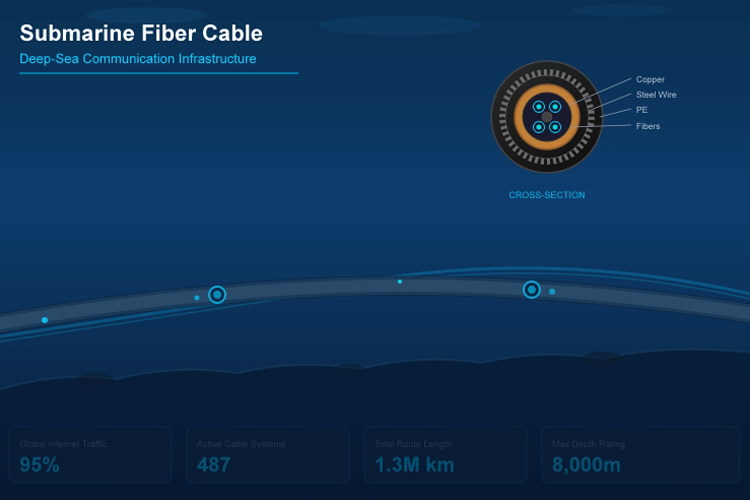 Submarine Fiber Cable: Deep Sea Communication Infrastructure Guide
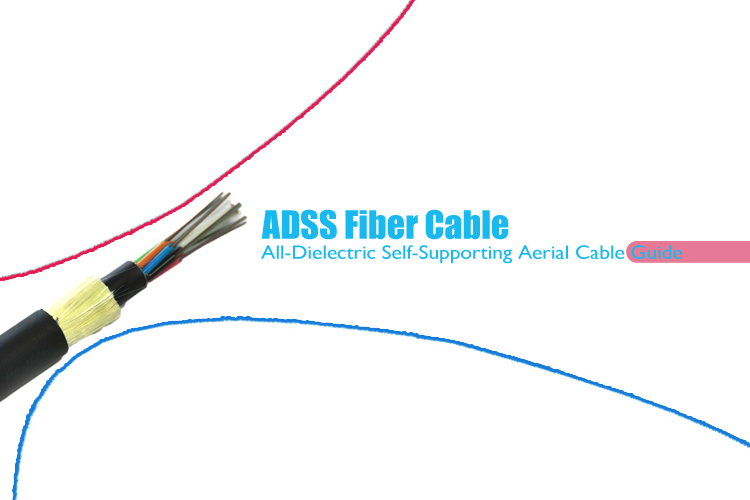 ADSS Fiber Cable: All-Dielectric Self-Supporting Aerial Cable Guide


