Analysis Report on the Current Status of Business Quality of Foreign Trade Salespersons
Views : 1812
Author : goodvin
Update time : 2025-06-24 11:10:55
Current Situation Assessment
Language Proficiency
Language proficiency is one of the core competencies of foreign trade sales personnel. Currently, most foreign trade salespeople possess basic English communication skills, but there are still shortcomings in the use of professional terminology, business writing, and expression within cross-cultural contexts. Research shows that fluent foreign language skills (especially English) are essential basic skills for foreign trade sales personnel, including listening, speaking, reading, and writing. This directly affects the accuracy and efficiency of tasks such as communicating with clients, contract signing, and document preparation.
Professional Skills
In terms of professional skills, foreign trade sales personnel need to master international trade rules, practices, and policies, and understand international trade terms, processes, and operational details. However, many current foreign trade salespeople have deficiencies in the following areas:
1. International Trade Knowledge: Some salespeople do not have a comprehensive grasp of international trade rules, payment methods, transportation modes, and other specialized knowledge.
2. Business Negotiation Skills: There is room for improvement in skills related to price negotiation and contract clause discussions, especially in finding optimal solutions acceptable to both parties while ensuring the company's interests.
3. Product Knowledge: Understanding of product features, advantages, and application areas is not deep enough, making it difficult to offer customized solutions tailored to client needs.
Market Insight
Market insight is an important quality for foreign trade sales personnel. High-quality salespeople should have keen market insight, able to promptly capture international market trends and use data analysis to understand consumer behavior, purchasing habits, and preferences in target markets, thus formulating precise marketing strategies [39]. However, many current foreign trade salespersons still have room to improve their market analysis capabilities, especially in data analysis and market trend forecasting.
Cross-Cultural Communication Skills
Cross-cultural communication skills are indispensable for foreign trade sales personnel. Research shows that high-quality foreign trade salespeople typically possess strong cross-cultural communication skills, able to understand and respect cultural differences, thereby avoiding misunderstandings or conflicts caused by cultural clashes [39]. However, currently, many foreign trade salespeople lack sufficient knowledge of cultural customs and business etiquette of different countries and regions, which affects effective communication with clients.
Comprehensive Qualities
In addition to the above professional abilities, foreign trade sales personnel should also have the following comprehensive qualities:
1. Learning Ability: The capability to continuously learn new knowledge, skills, and experiences to adapt to the ever-changing market environment.
2. Teamwork Ability: The ability to establish good cooperative relationships with colleagues, clients, and partners to complete tasks together.
3. Self-Management Ability: The capacity to manage time reasonably, complete tasks efficiently, and self-motivate and adjust mindset.
4. Legal Awareness: Familiarity with relevant laws and regulations to help the company conduct business legally and compliantly, effectively avoiding potential legal risks.
Overall, although the overall quality of Chinese foreign trade sales personnel continues to improve, there remains significant room for advancement in professional knowledge depth, market insight, and cross-cultural communication. With the increasing complexity of the global trade environment and the accelerated digital transformation, foreign trade sales personnel need to continuously enhance their comprehensive qualities to adapt to changes and challenges in the international market.
Problem Analysis
Disconnection Between Traditional Teaching and Current Needs
The cultivation of foreign trade talent currently faces a serious problem of disconnect between education and practice. The traditional teaching model of foreign trade-related majors in universities struggles to keep pace with the rapidly changing international trade environment, causing graduates to face many challenges upon entering the workforce. Specific manifestations include:
1. Course offerings are overly theoretical with a lack of practical components.
2. Teaching content updates lag behind, unable to keep up with new international trade rules and trends.
3. Insufficient training in digital trade tools, cross-border e-commerce platforms, and other innovative trade methods.
"Insufficient guidance for foreign trade-related students in universities and the disconnect between traditional teaching and current needs is one of the bottlenecks restricting China’s shift from a large trading nation to a strong trading nation".
Insufficient Client Development Ability
Foreign trade sales personnel have obvious shortcomings in client development, primarily reflected in:
1. Limited client acquisition channels: Over-reliance on traditional trade shows and B2B platforms, lacking diversified client development approaches.
2. Underutilization of social media: Failure to fully leverage international social platforms like LinkedIn and Facebook for client development.
3. Lack of market insight: Insufficient understanding of consumer behavior, purchasing habits, and preferences in target markets, making it hard to develop precise marketing strategies.
"Having strong client development ability is an advantage for newcomers in foreign trade: without being constrained by experience, they are more likely to try new methods. Using effective client acquisition channels to gain more customer resources and reduce company acquisition costs greatly helps improve business capabilities".
Lack of Negotiation Skills
Many foreign trade sales personnel show clear deficiencies in negotiation skills during international business negotiations:
1. Weak price negotiation: Difficulty finding optimal solutions acceptable to both parties while ensuring company interests.
2. Improper concession strategies: Lack of understanding on how to make reasonable concessions to close deals.
3. Lack of cultural sensitivity: Failure to fully consider the negotiation styles and cultural differences of clients from different countries.
"An excellent salesperson can sell street stall goods at mall prices, while an under-skilled salesperson can sell mall goods at street stall prices" [34], fully illustrating the critical impact of negotiation skills on the success of foreign trade business.
Insufficient Product Expertise
Many foreign trade sales personnel lack in-depth knowledge of the products they sell:
1. Incomplete mastery of technical parameters such as product material, specifications, and performance.
2. Inability to provide customized solutions tailored to client needs.
3. Lack of understanding of product applicability in different markets.
"Understanding product features, advantages, and application fields is fundamental for foreign trade sales personnel. High-quality salespeople can not only explain product functions and uses in detail but also provide customized solutions based on client needs" [39].
Cross-Cultural Communication Barriers
In cross-cultural communication, foreign trade salespersons commonly face the following issues:
1. Limited Language Proficiency: While possessing basic English communication skills, they still have shortcomings in the use of professional terminology and business writing.
2. Insufficient Awareness of Cultural Differences: Limited understanding of business etiquette and negotiation habits in different countries.
3. Inadequate Adaptation of Communication Styles: Failure to adjust communication strategies and methods based on the cultural background of clients.
"International trade means communicating with people from different cultural backgrounds. High-quality foreign trade salespersons usually possess good cross-cultural communication skills, are able to understand and respect differences in different cultures, and avoid misunderstandings or conflicts arising from cultural clashes".
By addressing these key issues, foreign trade salespersons can maintain competitiveness in an increasingly complex international trade environment and create greater value for enterprises.
Development Trends
With the increasing complexity of the global trade environment and the acceleration of digital transformation, the quality requirements for foreign trade salespersons are undergoing significant changes. The traditional role of foreign trade salespersons is transforming towards digitalization, specialization, and integration.
Soaring Demand for Digital Skills
Digitalization has become a core competency required of foreign trade salespersons. Modern foreign trade salespersons need to be proficient in:
1. Cross-border E-commerce Platform Operations: With the rise of cross-border e-commerce, salespersons need to be familiar with the operational rules and algorithm characteristics of major e-commerce platforms, and be able to perform store management, product listing, and optimized display. E-commerce regulations require that "merchants on e-commerce platforms must comply with relevant operating regulations, contractual agreements, and dispute resolution mechanisms".
2. Application of Digital Marketing Tools: Including social media marketing, search engine optimization (SEO), content marketing, and other digital marketing skills to improve product exposure and conversion rates in the international market.
3. CRM System Proficiency: Able to skillfully use customer relationship management systems to achieve systematic management and analysis of customer data, and improve customer service quality and efficiency.
Data Analysis Capabilities as a Core Competency
In a data-driven trade environment, data analysis capabilities have become a key quality of foreign trade salespersons:
1. Market Data Interpretation: Able to collect, analyze, and interpret international market data, grasp market trends, and changes in consumer demand. According to the latest research, foreign trade salespersons with market insight can "timely understand market dynamics and trends, and discover business opportunities and competitive risks".
2. Competitive Intelligence Analysis: Understand competitors' product strategies, pricing strategies, and market positioning through data analysis to develop targeted competitive strategies.
3. Performance Data Analysis: Able to analyze sales data, customer conversion rates, and other key indicators to continuously optimize sales strategies and product mix.
Construction of Cross-border E-commerce Knowledge System
With the rapid development of cross-border e-commerce, foreign trade salespersons need to build a complete cross-border e-commerce knowledge system:
1. Understanding Platform Rules: In-depth understanding of the operating rules, fee structures, and algorithm mechanisms of mainstream cross-border e-commerce platforms such as Amazon, eBay, and Wish.
2. Logistics and Supply Chain Knowledge: Master professional knowledge of international logistics selection, warehouse management, and supply chain optimization to ensure efficient delivery of products to global customers.
3. Payment and Settlement Knowledge: Understand cross-border payment methods, exchange rate risk management, and international settlement rules to reduce transaction risks.
Enhanced Legal Compliance Awareness
With the increasing complexity of the international trade environment, foreign trade salespersons' awareness of legal compliance needs to be significantly improved:
1. International Trade Rules: Familiar with the latest changes in WTO rules, regional trade agreements, and bilateral trade agreements. After China's accession to the WTO, it "pledged to resolve non-tariff barriers historically used to restrict trade", and salespersons need to understand these changes.
2. Target Market Regulations: Understand the product standards, certification requirements, and import restrictions of the target market to ensure that products legally and compliantly enter the target market. China has "a four-level standard system: national standards, industry standards, local standards", and foreign trade salespersons need to be familiar with the differences between these standards and international standards.
3. Intellectual Property Protection: Possess basic awareness of intellectual property protection, avoid infringement risks, and protect the company's own intellectual property.
Upgrading Cross-Cultural Communication Skills
In the context of globalization, cross-cultural communication skills need to be fully upgraded:
1. Multilingual Proficiency: In addition to English, mastering the local language of the target market will become a competitive advantage. Actual cases show that "foreign trade salespersons face huge language and cultural challenges when interacting with customers from all over the world".
2. Cultural Sensitivity: Deeply understand the cultural customs, business etiquette, and negotiation styles of different countries and regions to avoid cultural conflicts.
3. Remote Communication Skills: In the post-epidemic era, mastering non-face-to-face communication skills such as video conferencing and remote negotiations has become particularly important.
Industry Practice Case
A foreign trade company systematically trained its employees in digital skills, enabling its sales staff to proficiently use LinkedIn for client development and combine CRM systems to analyze customer data. Within a year, the company successfully increased its sales revenue in the European market by 30%. The company’s leader stated, "Modern foreign trade salespeople are not just sales personnel; they are also data analysts and cultural communication ambassadors."
Foreign trade salespeople are shifting from a purely sales role to becoming "digital trade experts." They need to continuously learn and adapt to new technologies, new regulations, and new models to remain competitive in an increasingly complex international trade environment.
Improvement Suggestions
Higher Education Improvement Recommendations
1. Optimize Curriculum Design
– Add digital trade courses, including practical skills training such as cross-border e-commerce platform operations and digital marketing tools application
– Strengthen teaching on international trade rules, practices, and policies to ensure students master the latest international trade knowledge
– Offer cross-cultural communication courses to cultivate students'understanding and respect for different cultural backgrounds
2. Strengthen Practical Teaching
– Establish university-enterprise cooperation models to give students opportunities to participate in real foreign trade operations
– Organize simulated international trade negotiations, exhibitions, and other practical activities to enhance students’ hands-on abilities
– Introduce case-based teaching methods to analyze successful and failed foreign trade cases, developing students’ problem-solving skills.
Corporate Training Improvement Recommendations
1. Systematic Training System
– Build a phased, multi-level training system providing differentiated training for sales staff at different experience levels
– Regularly organize internal training covering industry trends, legal regulations, market analysis, and other knowledge
– Invite industry experts to deliver specialized lectures, sharing the latest foreign trade trends and practical experiences
2. Practical Training Opportunities
– Assign new employees to participate in large projects to improve comprehensive skills through practice
– Organize sales staff to attend international exhibitions, increasing face-to-face interaction opportunities with clients
– Establish a mentorship system where experienced sales staff guide newcomers to accelerate experience accumulation
3. Incentive Mechanism Construction
– Design a reasonable performance evaluation system to stimulate salespeople’s enthusiasm and creativity
– Establish promotion channels with clearly defined professional and management career paths
– Provide overseas training and exchange opportunities to broaden sales staff’s international perspectives
Personal Development Recommendations
1. Continuous Learning Ability
– Cultivate autonomous learning habits, continuously acquiring new knowledge, skills, and experiences
– Stay informed on industry developments and market trends, timely adjusting business strategies
– Participate in industry seminars and training courses to expand professional knowledge
2. Market Insight Development
– Learn data analysis tools and methods to enhance the ability to interpret market data
– Regularly analyze competitors and market opportunities, cultivating keen market insight
– Build personal market information collection channels to maintain sensitivity to market changes
3. Psychological Quality Cultivation
– Strengthen stress resistance, learning to remain calm and optimistic under pressure
– Develop a positive mindset, viewing failure as a learning opportunity rather than a setback
– Learn emotional management skills to maintain a good working state
4. Network Building
– Actively participate in industry exchange activities to establish connections with peers
– Make good use of professional social platforms like LinkedIn to expand international networks
– Maintain good customer relationships to establish long-term stable business cooperation
Through these multidimensional improvement strategies, the professional quality and comprehensive abilities of foreign trade sales staff can be thoroughly enhanced, enabling them to maintain competitive advantages in the increasingly complex international trade environment.

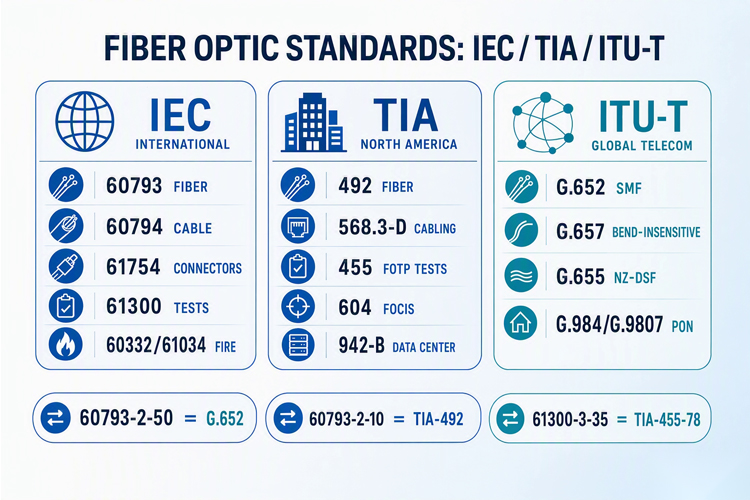 Fiber Optic Cable Standards: IEC/TIA/ITU Complete Guide
 Fiber Optic for CCTV & Security: Long-Distance Surveillance Guide
 Railway & Mass Transit Fiber Communication Systems Guide
 Oil & Gas Fiber Optic: Explosive-Proof Cabling Solutions Guide


