
English
Welcome to opelink.com
Industry News

Optical-Electrical Integration for Indoor Cabling: Revolutionizing Indoor Wireless Coverage

Views : 1507
Update time : 2024-07-24 10:10:44
Introduction
 
In the era of seamless connectivity, indoor wireless coverage plays a vital role in providing uninterrupted access to the internet and other communication services. To meet the growing demand for high-performance and convenient indoor wireless coverage, researchers are exploring optical-electrical fusion solutions for indoor cabling. This innovative approach combines the advantages of optical and electrical technologies to create a convenient and high-performance indoor wireless infrastructure.

 
1.Understanding Optical-Electrical Integration for Indoor Cabling:
Optical-electrical integration for indoor cabling refers to the integration of optical and electrical components to establish a reliable and efficient indoor wireless network. This integration involves the deployment of optical fibers for data transmission and electrical components for power delivery, providing a comprehensive solution for indoor connectivity.
 
2.Advantages of Optical-Electrical Integration:
2.1 Enhanced Data Transmission: By utilizing optical fibers for data transmission, optical-electrical integration enables higher bandwidth and longer reach compared to traditional copper-based solutions. This results in faster and more reliable data transfer, supporting the increasing demand for high-speed internet access.
 
2.2 Power Delivery Capability: In addition to data transmission, optical-electrical integration allows for the delivery of power over the same infrastructure. This eliminates the need for separate power cables, simplifying installation and reducing clutter in indoor environments.
 
2.3 Scalability and Flexibility: Optical-electrical integration offers scalability and flexibility in indoor cabling solutions. The use of optical fibers allows for easy expansion and future-proofing, enabling businesses to adapt to evolving connectivity needs without significant infrastructure changes.
 
2.4 Immunity to Interference: Optical fibers are immune to electromagnetic interference, ensuring a stable and reliable indoor wireless network. This is particularly important in environments where electromagnetic interference is common, such as hospitals, factories, and office buildings.
 
3.Implementing Optical-Electrical Integration for Indoor Cabling:
3.1 Fiber Optic Cabling: The foundation of optical-electrical integration is the deployment of fiber optic cables. These cables transmit data using light signals, providing higher bandwidth and longer reach compared to traditional copper cables.
 
3.2 Power Over Ethernet (PoE): Power over Ethernet technology enables the delivery of power alongside data over the same cable. This eliminates the need for separate power cables, simplifying installation and reducing costs.
 
3.3 Optical-Electrical Fusion Solutions: Various fusion solutions are available to combine optical and electrical components seamlessly. These solutions involve the integration of optical connectors, splitters, and converters with electrical components, enabling efficient transmission and power delivery.
 

Conclusion
Optical-electrical integration for indoor cabling is revolutionizing indoor wireless coverage by providing a convenient and high-performance solution. This approach combines the advantages of optical and electrical technologies, enabling faster data transmission, power delivery, scalability, and immunity to interference. As businesses and individuals continue to rely on wireless connectivity, optical-electrical integration offers a reliable and future-proof solution for indoor environments.
 

FAQs:
 
Q1. How does optical-electrical integration improve indoor wireless coverage?
A1. Optical-electrical integration improves indoor wireless coverage by utilizing optical fibers for data transmission, enabling higher bandwidth, longer reach, and faster data transfer. Additionally, it allows for power delivery over the same infrastructure, eliminating the need for separate power cables.
 
Q2. Is optical-electrical integration compatible with existing indoor cabling infrastructure?
A2. Yes, optical-electrical integration is compatible with existing indoor cabling infrastructure. It can be seamlessly integrated with traditional copper-based solutions, allowing for a smooth transition and easy expansion.
 
Q3. Can optical-electrical integration support multiple indoor wireless devices simultaneously?
A3. Yes, optical-electrical integration supports multiple indoor wireless devices simultaneously. The high bandwidth offered by optical fibers allows for efficient data transmission to support a large number of connected devices.
 
Q4. Is optical-electrical integration secure for indoor wireless networks?
A4. Yes, optical-electrical integration is secure for indoor wireless networks. Optical fibers are immune to electromagnetic interference, providing a stable and secure network infrastructure for data transmission.
 
Q5. What are the cost implications of implementing optical-electrical integration?
A5. While the initial investment for optical-electrical integration may be higher compared to traditional copper-based solutions, the long-term benefits, such as higher bandwidth, scalability, and reduced maintenance costs, make it a cost-effective choice for indoor wireless coverage.
 

Keywords: Optical-electrical integration, indoor cabling, indoor wireless coverage, data transmission, power delivery, scalability, fiber optic cabling, Power over Ethernet, fusion solutions.

 
Related News
Read More >>
WDM Product Market Research Report: Technology, Trends, and Growth Forecast WDM Product Market Research Report: Technology, Trends, and Growth Forecast
Jun .02.2026
Comprehensive market research report on WDM products, covering technology principles, market size, competitive landscape, and future trends in optical communication.
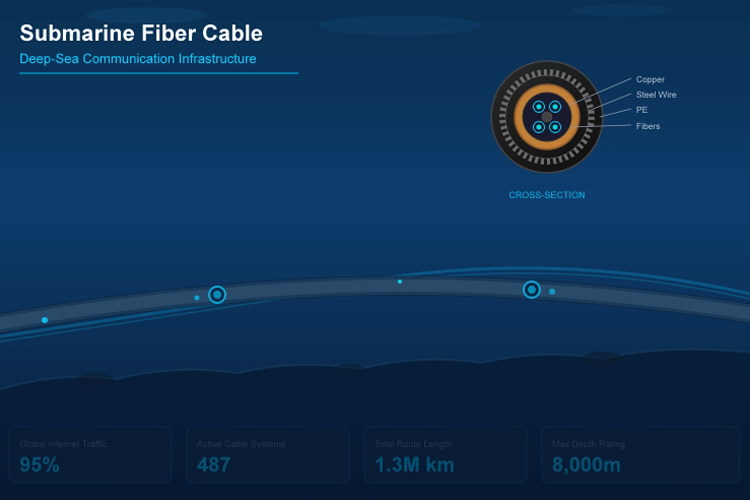
Submarine Fiber Cable: Deep Sea Communication Infrastructure Guide Submarine Fiber Cable: Deep Sea Communication Infrastructure Guide
May .26.2026
This article is a guide to submarine optical cable products. the same time, it introduces the deployment scale, market investment status and benchmark engineering cases of the current global submarine optical cable system.
ADSS Fiber Cable: All-Dielectric Self-Supporting Aerial Cable Guide ADSS Fiber Cable: All-Dielectric Self-Supporting Aerial Cable Guide
May .19.2026
ADSS fiber cable guide: all-dielectric self-supporting design for high-voltage environments, span lengths up to 1000m, ECR glass yarn vs aramid yarn, IEC 60794-4 standards.
Outdoor Fiber Optic Cable: Installation & Selection Guide Outdoor Fiber Optic Cable: Installation & Selection Guide
May .12.2026
Outdoor fiber optic cable guide: loose tube vs tight buffer, direct burial vs aerial, UV-resistant jacket, temperature ratings. IEC 60794 standards and selection criteria for OSP deployments.