SC APC to SC APC Fiber Patch Cord: Simplex, Single-Mode OS2, G.657A2 PVC-OFNR Jacket
Enhance your network connectivity in demanding conditions with the Fiber Patch Cord. This robust SC APC to SC APC Simplex cable, Simplec Single-Mode G.657A2 with a PVC-OFNR jacket, is engineered for superior performance in industrial, outdoor, and harsh environments.this fiber optic patch cord ensures reliable high-speed data transmission with low insertion loss.
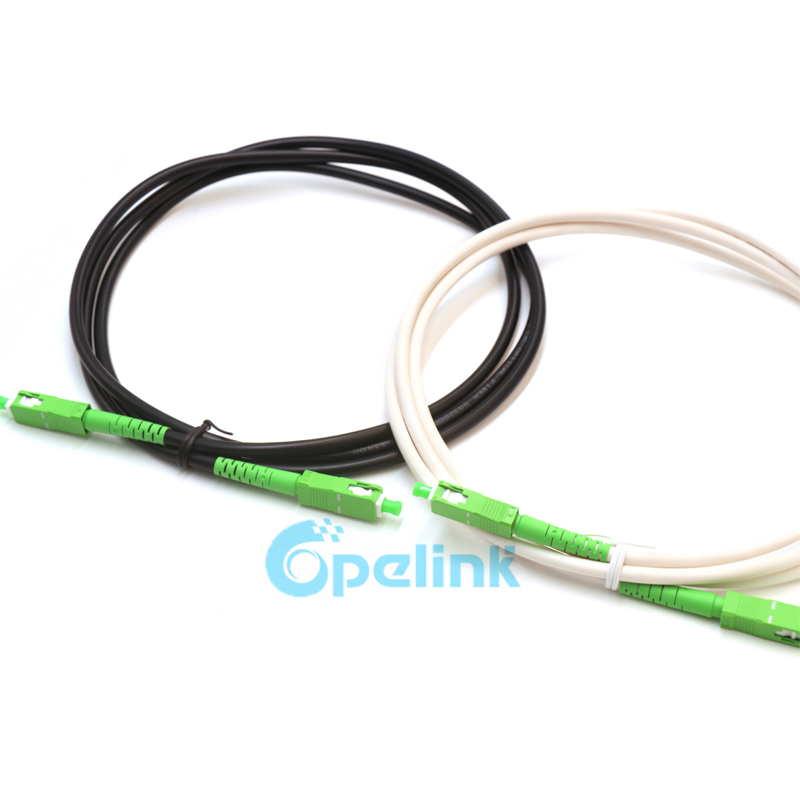
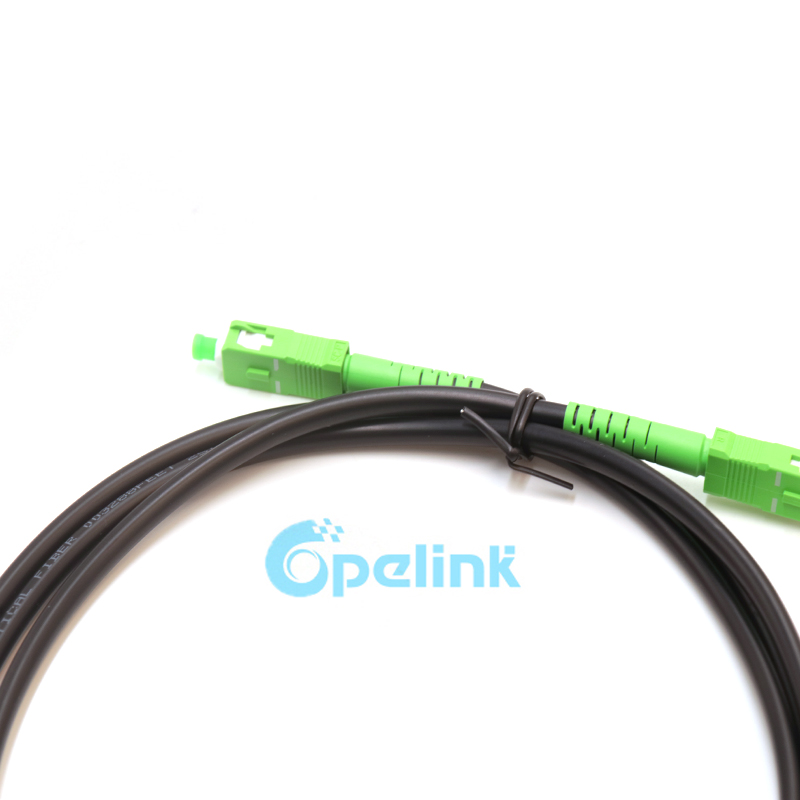
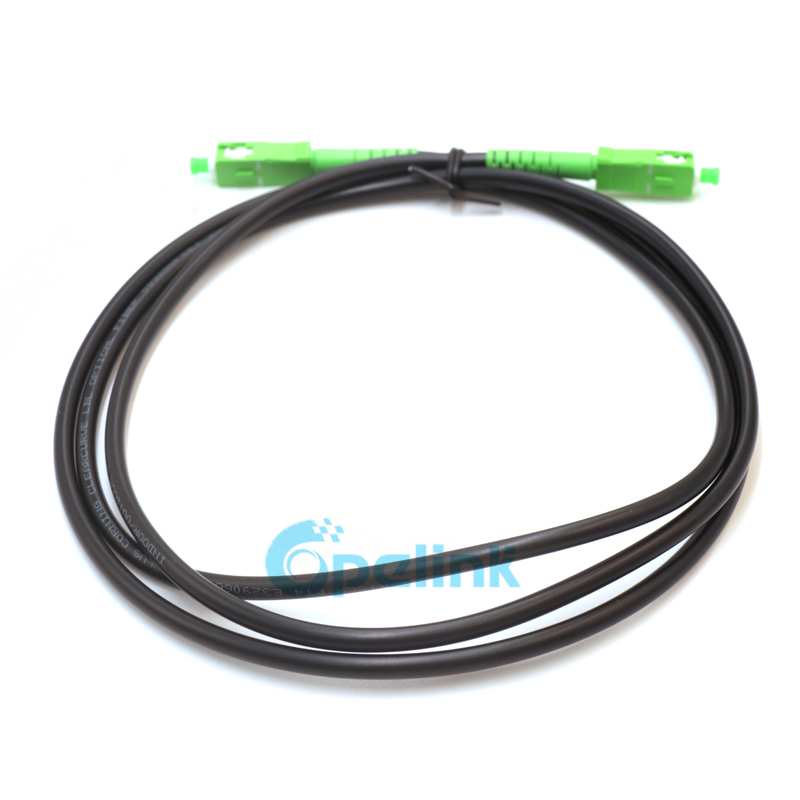
Product Details:
| Connector A |
SC APC Duplex, mini boot |
Connector B |
SC APC Duplex, mini boot |
| Fiber Count |
1 Fibers |
Fiber Grade |
G.657A2(Compatible with G.652.D) |
| Fiber Mode |
OS2 9/125μm |
Wavelength |
1310/1550nm |
| Cable Diametre(OD) |
5mm |
Cable Jacket |
PVC-OFNR |
| Min.Bend Radius(Optical Fiber) |
7.5mm |
Min.Bend Radius(Fiber Cable) |
20/10D(Dynamic/Static) |
| Connector Durablity |
500 times |
Flex Resistance |
2000 Cycles |
| Insertion Loss |
≤0.3dB |
Return Loss |
≥65dB |
| Operating Temperature |
-40 to 80°℃ |
Storage Temperature |
-40 to 80°℃ |
Key Features of the Fiber Patch Cord
1.Bend-Insensitive G.657.A2 Fiber: Compatible with G.652.D, this OS2 9/125μm single-mode fiber maintains signal integrity during repeated bending (min. bend radius 7.5mm for fiber, 20/10D dynamic/static for cable) and twisting, with attenuation of 0.36 dB/km at 1310nm and 0.22 dB/km at 1550nm.
2.High-Performance Connectors: SC APC Duplex to SC APC Duplex with ≤0.3dB insertion loss, ≥50dB return loss, and 500-cycle durability for reliable connections in fiber optic networks.
Applications for the Single-Mode Fiber Patch Cord
High-Reliability Networks: Supports 10G/40G/100G Ethernet with low loss for data centers, telecom, and FTTH setups.
Frequently Asked Questions
1. Does this outdoor patch cord meet RoHS and REACH?
OPELINK issues RoHS (EU 2011/65/EU) and REACH (EC 1907/2006) declarations for the exact PVC-OFNR compound and SC APC housings shipped with each order.
- Declarations reference the delivered batch rather than a catalogue entry
- PVC-OFNR jacket is halogen-free and flame-retardant by formulation
- Copies are released with the packing list on request
2. Is a CE or UKCA declaration available for export?
CE marking applies to the finished assembly only when the buyer's project scope requires it, so the declaration route is confirmed in the quotation.
- UKCA follows the same technical file as CE
- RoHS test reports are attached to the RFQ response on request
- Declaration wording is fixed before production begins
3. Should I choose G.657A2 or G.652.D fiber?
G.657A2 is the default because it bends to a 7.5 mm radius while staying fully compatible with G.652.D links at 1310 and 1550 nm.
- Bend-insensitive fiber survives tight wall-drop loops
- G.652.D is quoted where the network standard forbids bend-insensitive grades
- Both grades carry the same ≤0.3 dB insertion loss limit
4. Why is black jacket used for aerial spans?
The carbon-loaded black compound blocks UV degradation, which is why black is specified for exposed aerial spans instead of white.
- The white version suits wall drops where color matching matters
- Black adds no optical penalty: ≤0.3 dB loss and ≥65 dB return loss
- Both versions use the same 5.0 mm PVC-OFNR construction
5. What minimum bend radius must be respected on site?
Keep 100 mm during dynamic pulls and 50 mm once the 5.0 mm cable is fixed, with 7.5 mm as the fiber limit.
- The rule is 20 times cable diameter dynamic and 10 times static
- Bend radius is measured to the inside of the curve
- Loss at 1550 nm rises before any visible jacket damage appears
6. How is insertion loss verified before shipment?
Each assembly is measured at 1310 and 1550 nm against the ≤0.3 dB insertion loss limit and the ≥65 dB return loss threshold.
- End faces are inspected to the IEC 61300-3-35 criteria before packing
- Test values are recorded per assembly, not sampled from a batch
- Test data can accompany the shipping documents on request
7. Can an APC connector be mated with a UPC port?
No — an 8° APC ferrule pressed against a flat UPC ferrule damages both faces and pushes return loss above −20 dB.
- The angled contact leaves an air gap that reflects light to the source
- Ports, adapters and test cords must all be APC-keyed
- Mixed mating shows as a crescent scratch under inspection
8. What climate range does the black outdoor cord cover?
The assembly is rated from −40 °C to +80 °C with 500 mating cycles and 2000 flex cycles for repeated outdoor handling.
- PVC-OFNR stays flexible at −40 °C without jacket cracking
- UV-stabilized black compound suits continuous aerial exposure
- Operation above +80 °C requires a different jacket compound
9. What information does a quote request need?
An RFQ needs length, polish at both ends, jacket color and fibre grade; OPELINK then confirms lead time with the quotation.
- Lengths are cut per order, so meterage drives the schedule
- Simplex mini-boot termination is standard on both ends
- Project volumes above standard spools are scheduled after approval